
Getting started with solar
DIY Solar: The Self-Install Guide With Expert Support
Thinking about DIY solar? Learn the real decisions — net metering, permits, financing — and get a professionally designed system without going it alone.
Why Do It This Way?
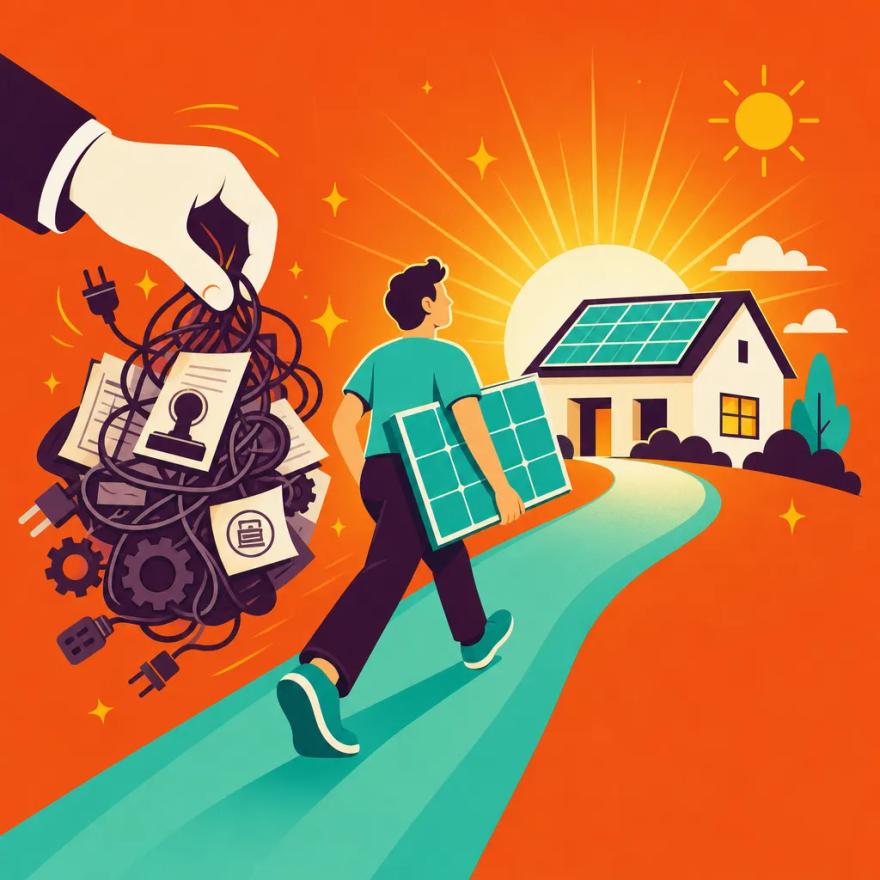
If you go buy a pile of solar equipment and source it yourself, the panels are the easy part. It's everything around them — pulling permits, the utility interconnection agreement, making sure the gear you bought actually works together, the nagging "am I doing this right?" — that trips people up. That is exactly the part we take off your plate.
We've already vetted the products and know they work together. We hand you a custom guide built for your specific system, we handle the permitting, plan set, and interconnection paperwork, and we back you with real support after the sale. You follow the plan; we clear the red tape.
Call it prosumer self-install — DIY on steroids that still saves you real money. You stay in control of the quality, instead of handing your roof to a crew running three other installs that day. Do they care about your system as much as you do? No. You do.
What Is Self-Install Solar With Expert Support?
Self-install solar does not mean you are left alone to figure everything out. It means you take on the parts of the project you are capable of handling, while getting expert support for the parts that have to be designed, documented, and approved correctly.
With Unbound Solar, that can include:
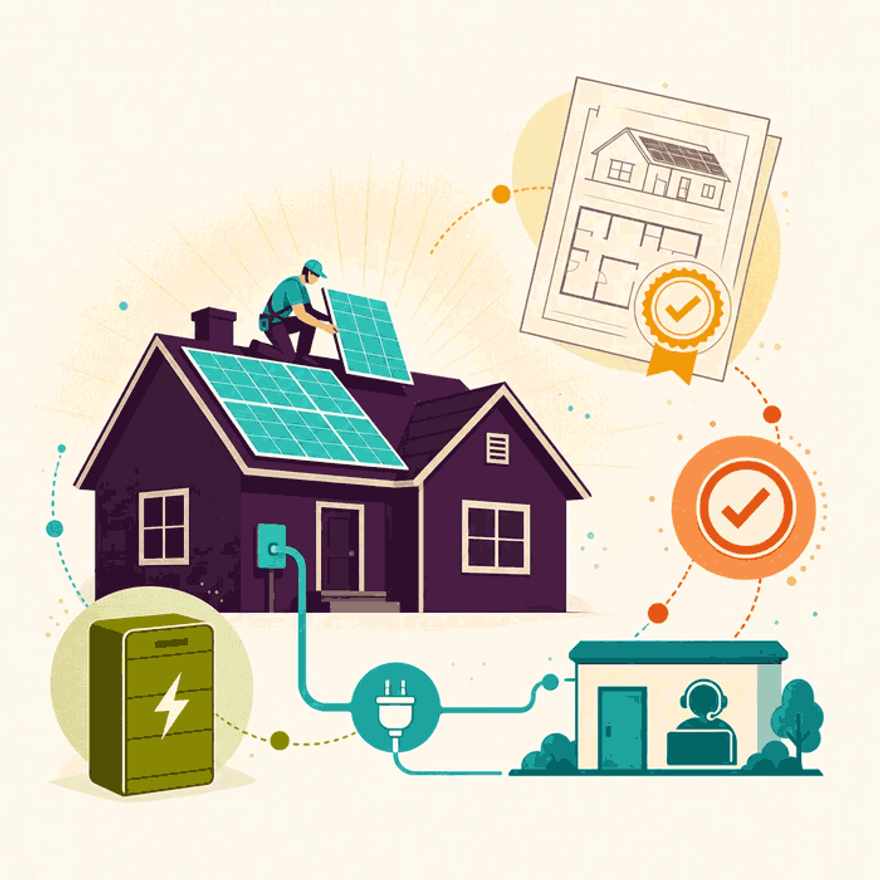
- System designA system engineered around your actual usage, site, and utility — not a generic kit size.
- Permit-ready plan setsThe drawings your jurisdiction requires, prepared correctly the first time — with stamped engineering where required.
- Utility interconnection supportThe paperwork and process for your permission to operate, handled with your utility.
- Plan revisions & inspection supportIf plan check or the inspector asks for changes, you're not on your own.
- Battery & generator integrationBackup power designed in from the start, not bolted on later.
- Electrician guidanceClear direction on when and where to bring in a licensed electrician.
You still own the project. You still control the work. But you are not guessing your way through system sizing, inverter compatibility, permitting, utility approval, or backup power design. That is the difference between simply buying solar equipment and building a solar system that is designed to work for your home.
Start With Your Main Goal
Most solar projects fall into one of five main goals. You may care about more than one, but choosing your top priority makes every decision easier.
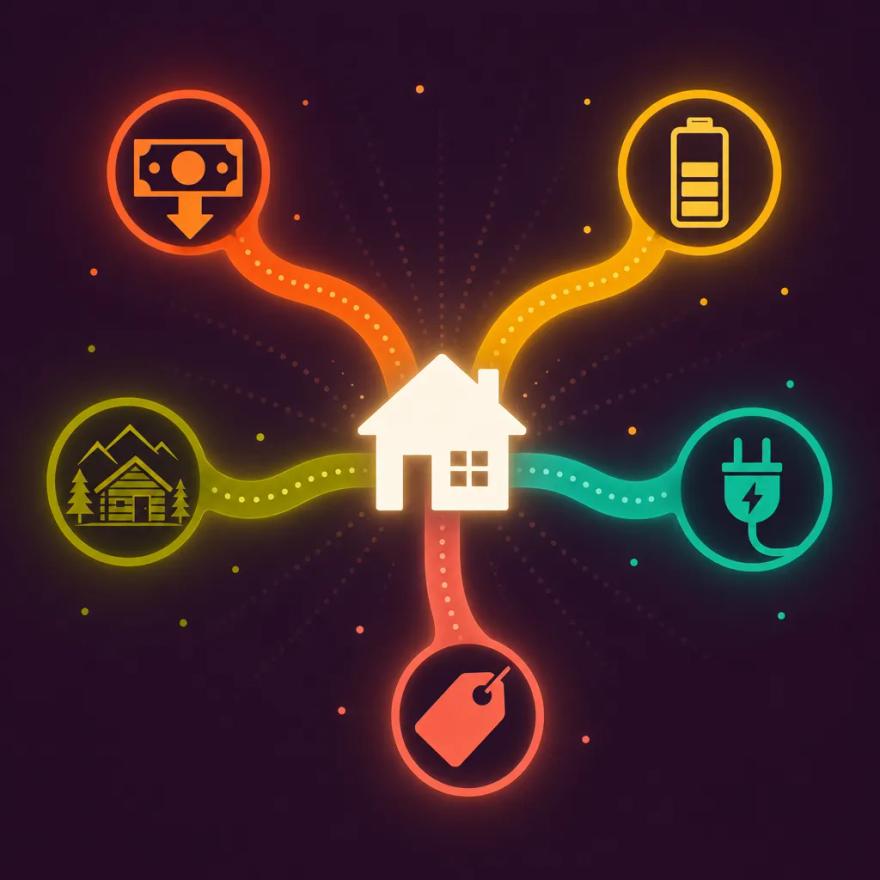
1. Lower Your Electric Bill
If your main goal is saving money, you are probably looking at a grid-tied solar system. A grid-tied system connects to your home and the utility grid. Your solar panels produce electricity during the day. Your home uses that power first. Depending on your utility rules, extra production may be exported to the grid for credit or compensation. This is usually the simplest and most cost-effective solar path for homes that already have utility power.
Best fit if:
- You already have grid power
- Your electric bill is high
- You want to reduce what you buy from the utility
- You do not need backup power during outages
- Your utility has favorable solar billing or export rules
2. Add Backup Power
If your main concern is keeping power during outages, you are likely looking at solar with battery backup. A battery system can keep selected loads running when the grid is down. That may include a refrigerator, lights, internet, outlets, medical equipment, a well pump, or other essentials.
The key is deciding what actually needs to stay on. Backing up a refrigerator, lights, and a few outlets is very different from backing up an entire home with central air, electric heat, a well pump, and large appliances. The more you want to run, and the longer you want to run it, the larger and more expensive the backup system becomes.
Best fit if:
- Your area has frequent outages
- You have critical loads that need to stay powered
- You want more control during storms or grid disruptions
- Your utility rules make storing and using your own solar power more attractive
- You are willing to spend more for resilience and flexibility
3. Power an Off-Grid Property
If your property does not have utility power, or bringing in power lines would be extremely expensive, off-grid solar may be the right path. An off-grid system is more than solar panels. It is a complete power system. It usually includes solar panels, batteries, charge controls or hybrid inverter equipment, backup generation, and careful load planning.
Off-grid design starts with your daily energy use. Every appliance, pump, light, tool, and device matters. You also need to plan for seasonal changes, cloudy weather, winter production, and backup power.
Best fit if:
- Your property has no utility connection
- Running power lines is too expensive or impractical
- You are powering a cabin, ranch, remote home, shop, or outbuilding
- You are willing to manage your own stored energy
- You understand that off-grid systems require more planning than grid-tied systems
4. Prepare for Future Energy Use
Your current electric bill tells you what you use now. It does not always show what you will need next year. If you plan to add an EV charger, heat pump, mini-split, electric water heater, workshop, pool equipment, well pump, or home addition, your future energy use may be much higher than your current usage. That matters for system sizing.
Best fit if:
- You are planning to electrify more of your home
- You expect your power usage to increase
- You want the system designed with expansion in mind
- You are building a new home, shop, barn, or ADU
- You want to avoid installing a system that feels too small later
5. Compare Against a Turnkey Solar Quote
Many homeowners come to self-install solar after seeing the price of a full-service solar quote. That does not mean every turnkey quote is bad. Professional installation has real value. But a large part of installed solar cost is not the equipment itself. Labor, permitting, interconnection, sales costs, financing fees, overhead, and profit can all add to the final price. Self-install solar gives capable homeowners a way to reduce project costs while still getting professional design and support.
Best fit if:
- You received a high quote from a solar installer
- You want to own your equipment
- You are comfortable managing parts of the project
- You want more visibility into the system design and cost
- You are willing to hire an electrician for the parts that require one
Net Metering — What Most People Get Wrong
This is the single most misunderstood part of going solar, and it's the thing that most changes your payback. If you understand this, you're ahead of most people getting quotes.
How the credit "bank" works
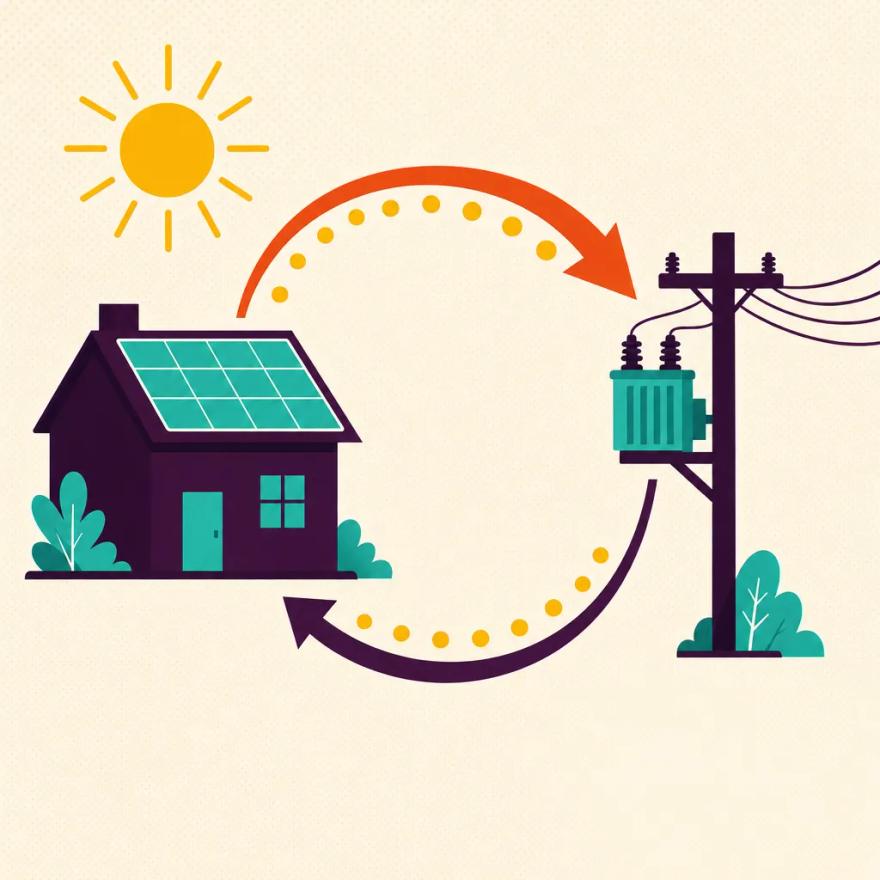
Your panels make the most power in summer — often when your house uses the least — and the least in winter, when you use the most. Net metering bridges that gap. When you overproduce, your meter effectively runs backward and you bank a credit with the utility. At night and in winter, you draw that credit back down. Size the system right and, over a 12-month period, you net out to roughly zero. That's where the name comes from.
What changed — and why California is the cautionary tale
For years the deal was simple and generous. Under older net-metering rules — California's NEM 1.0 and 2.0 are the textbook example — the power you exported was credited at close to the full retail rate, and that arrangement was locked in and grandfathered for years. Because the credit tracked the retail price, it actually grew more valuable as electricity got more expensive: close to a true one-to-one relationship between the power you sent out and the power you pulled back.
Then California — long the national leader in solar — moved to NEM 3.0 and flipped that on its head. Exports are now credited at a small fraction of retail (often just a few cents) even as the retail price of power keeps marching toward 40¢ and up in parts of the state. For a plain grid-tie system, that quietly rewrites the payback math.
The battery play — be your own energy broker
When export credits are low, the smart move isn't to dump cheap power onto the grid — it's to keep it. Homeowners in California are doing exactly that: adding a battery to store the day's overproduction and spend it at night instead of buying it back at full retail. Lithium prices have fallen far enough over the last few years that it pencils — and you get backup power in an outage as the bonus. Store your own cheap solar, use it when power is expensive, and stop depending on the utility for the credit or the reliability.
Done right, a battery lets you recapture most of your solar's monetary value even in a weak net-metering market — which is why batteries have shifted from luxury add-on to the thing that protects your payback.
Why it still makes sense — even as the federal credit fades
You may not find a local rebate where you live, and the federal solar tax credit is on its way out. But in high-rate states — California, Hawaii, Massachusetts, New York, and a growing list of others — electricity is already expensive enough that solar, increasingly paired with a battery, still pays for itself. And where prices are heading matters as much as today's rate.
Power has climbed sharply over the last five years, and most forecasts expect the next five to ten to be steeper still. A few forces are pushing in the same direction:
- An aging, overstretched grid that costs more to maintain and patch
- A surge in demand from AI data centers, electric vehicles, and the broader electrification of homes and industry
- Geopolitical shocks that keep fuel — and therefore power — prices volatile
- A growing desire not to be fully dependent on a grid that's showing its age
That last point is doing a lot of work. Major outages that once felt like someone else's problem are spreading, and homeowners who never used to think twice about their electric bill are suddenly watching it climb. Generating and storing your own power is starting to look less like a way to save a few dollars and more like a hedge — for your budget and your independence.
Going deeper: the full Net Metering guide — coming soon
Which System Fits You
Most home solar projects fall into one of three categories. The right one follows directly from the goal you picked above — here's how they compare side by side.
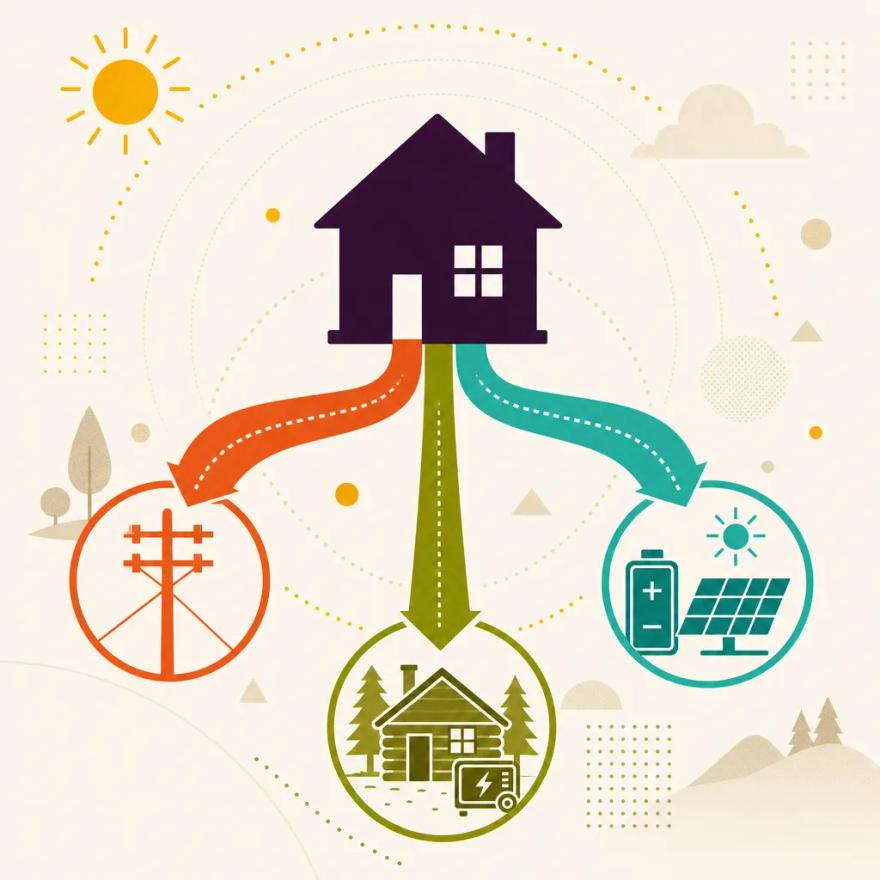
| Grid-Tied Solar | Grid-Tied + Battery Backup | Off-Grid Solar | |
|---|---|---|---|
| Relative cost | Lowest — fewest components | Higher — adds battery, hybrid inverter, backup circuits | Highest per kWh — must cover 100% of your needs, year-round |
| Power during an outage | No — shuts down for utility-worker safety | Yes — backs up the loads you design it for | Yes — the grid was never part of the picture |
| Design complexity | Simplest; utility approval and permits still required | Moderate; load planning and battery sizing drive the design | Highest; sized around every load, season, and cloudy stretch |
| Best fit | Lowering a bill on a home with reliable grid power | Outage-prone areas, critical loads, or weak export rates (NEM 3.0-style rules) | Cabins, ranches, and remote properties where line extension is impractical |
| Watch out for | Savings hinge on your rate and export rules | Whole-home backup gets expensive fast — prioritize loads | Guessing at loads; most builds also need a backup generator |
A few notes the table can't carry:
- Grid-tied is usually the best starting point if your main goal is lowering your electric bill. Your home uses solar power first; any extra may be exported, depending on your utility's rules.
- Grid-tied with battery backup is, for a lot of homeowners on newer utility rules, the build that actually protects the payback — you keep your cheap daytime solar instead of selling it back at wholesale.
- Off-grid must produce, store, and manage all the power your property needs. Many of the most resilient builds pair a right-sized battery bank with a backup generator — the panels and battery carry the everyday load, and the generator covers the worst-case stretch of dark winter days.
The Decisions That Actually Matter
You don't need to become an electrical engineer. But four choices shape your system more than anything else. Here's the confident version of each — deeper guides on every one are on the way.
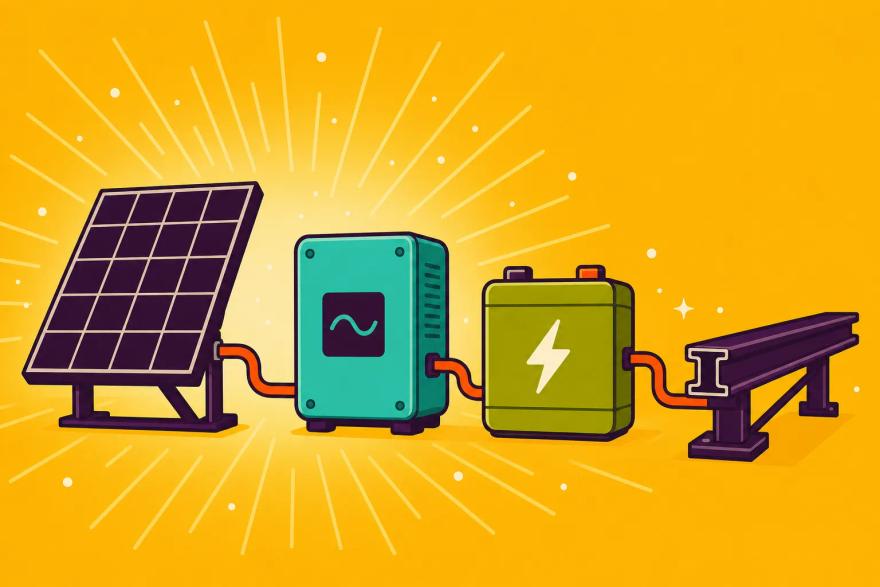
Solar Panels
Don't overpay for marketing. Modern tier-one panels — the TOPCon generation and its peers — are far more alike than the ads suggest. What actually matters is efficiency for the space you have (tighter roofs need more watts per panel), and a real warranty from a manufacturer that will still be around to honor it in 20 years. Chasing the last percent of efficiency rarely changes your bill; picking a proven brand does.
Going deeper: the Solar Panel guide — coming soon
Inverters
This is the decision that quietly makes or breaks a system. String vs. microinverters, standard vs. hybrid (battery-ready), and getting the sizing and surge headroom right for your loads — and any battery you'll add later. The rule of thumb: match the inverter to the goal, not the other way around. A backup goal points you toward a hybrid inverter from day one, even if the battery comes later.
Check your wire run for voltage drop
Going deeper: the Inverter guide — coming soon
Batteries
Lithium (LiFePO4) has replaced old lead-acid for almost everyone — longer life, far more usable capacity, and no maintenance babysitting. The real question isn't the chemistry anymore, it's the sizing: what do you want to run, and for how long? That's a load-and-runtime calculation, not a guess.
Going deeper: the Battery guide — coming soon
Racking & Mounting
Roof or ground changes everything downstream. A ground mount means poles, concrete, trenching, sometimes fencing — and a longer wire run, which is where voltage drop and codes like California's Title 24 come into play. Roof mounts hinge on your roof type, age, and penetrations done right. Solid racking is the unglamorous part that keeps the whole system on your roof through 25 years of wind and weather.
Run the Title 24 / solar mandate check
Going deeper: the Racking guide — coming soon
Paying For It & Saving Money
Let's talk money — because a lot of what people think they know about solar incentives is out of date.
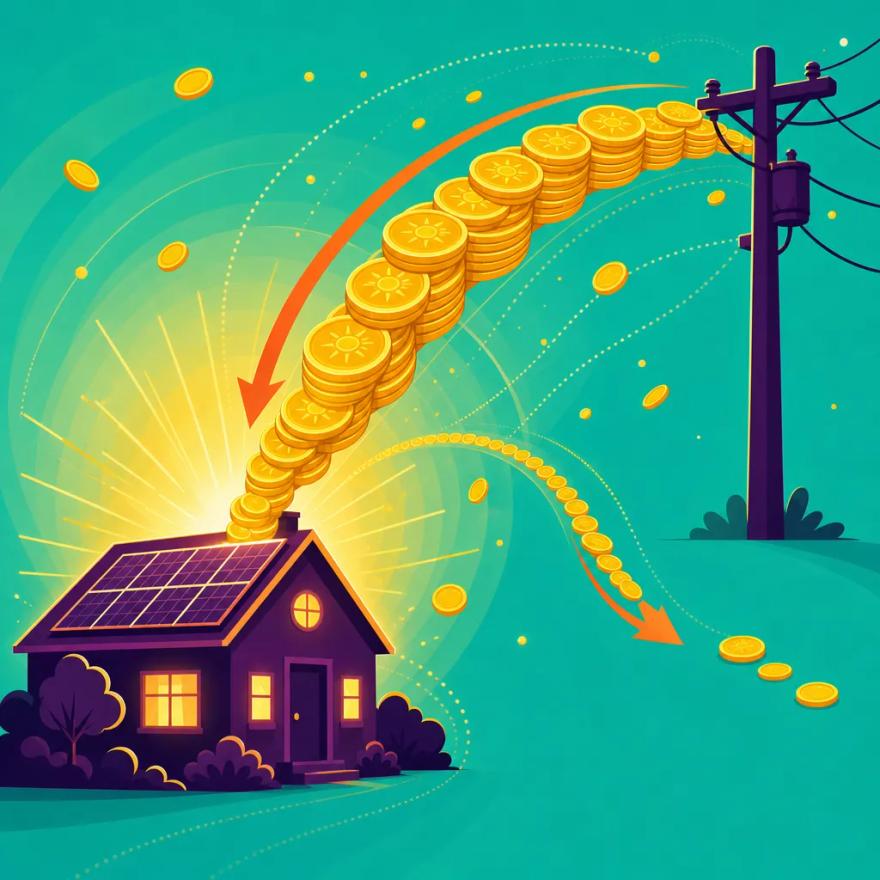
The federal tax credit is gone — here's where savings live now
You may have heard about the 30% federal solar tax credit. It has ended. The Residential Clean Energy Credit (Section 25D) expired December 31, 2025, with no phase-down and no grandfathering — systems placed in service in 2026 or later do not qualify. If you've been searching for it and getting confused, that's why: the program that defined solar's math for a decade is no longer available.
That doesn't mean the savings disappeared. It means you look in different places now, and the best remaining incentives are local.
Rebate vs. tax credit — know the difference
- A tax creditReduces what you owe the government at tax time. You need enough tax liability to actually use it, and you claim it when you file — so the benefit can come months after you buy.
- A rebateMoney back on the purchase itself — usually faster, and it doesn't depend on your tax situation. When you search, you may find a state or utility rebate even where there's no state tax credit.
Financing & the HELOC play
Here's what a lot of savvy homeowners do instead of waiting on an incentive: they use a HELOC — a home equity line of credit — to fund the system. It isn't an incentive; it's leverage. Instead of renting power from the utility forever, you borrow against equity you already have, own the system outright, and redirect that monthly utility payment into your own asset — your home.
It's not the right tool for everyone, but for the right situation it turns "I can't afford the upfront cost" into a monthly number that often looks a lot like the power bill you're already paying.
One caveat worth knowing: whether HELOC interest is tax-deductible depends on IRS rules (the funds generally must buy, build, or substantially improve the home securing the loan, and you must itemize) and on your own tax situation — confirm with a tax professional before you count on it.
Going deeper: the Solar Financing guide — coming soon
Why Your Location Matters
An 8 kW solar system in Phoenix, AZ will not produce the same amount of power as an 8 kW system in Seattle, WA. The equipment may be the same, but the output changes based on:
- Sun exposure
- Weather
- Roof angle
- Roof direction
- Shade
- Local temperature
- Snow or seasonal conditions
- System losses
- Utility rules
That is why generic kit sizing can be misleading. A system should be designed around your actual location, your actual electric usage, and your actual site conditions. Your electric bill is the best starting point. It shows how much power you use in kilowatt-hours, often written as kWh. From there, your system can be modeled around your address, available space, roof or ground-mount options, and production goals.
Model it on your actual addressThe estimator accounts for your location, usage, and rates — the three things generic kit sizing ignores.Use our Solar Estimator →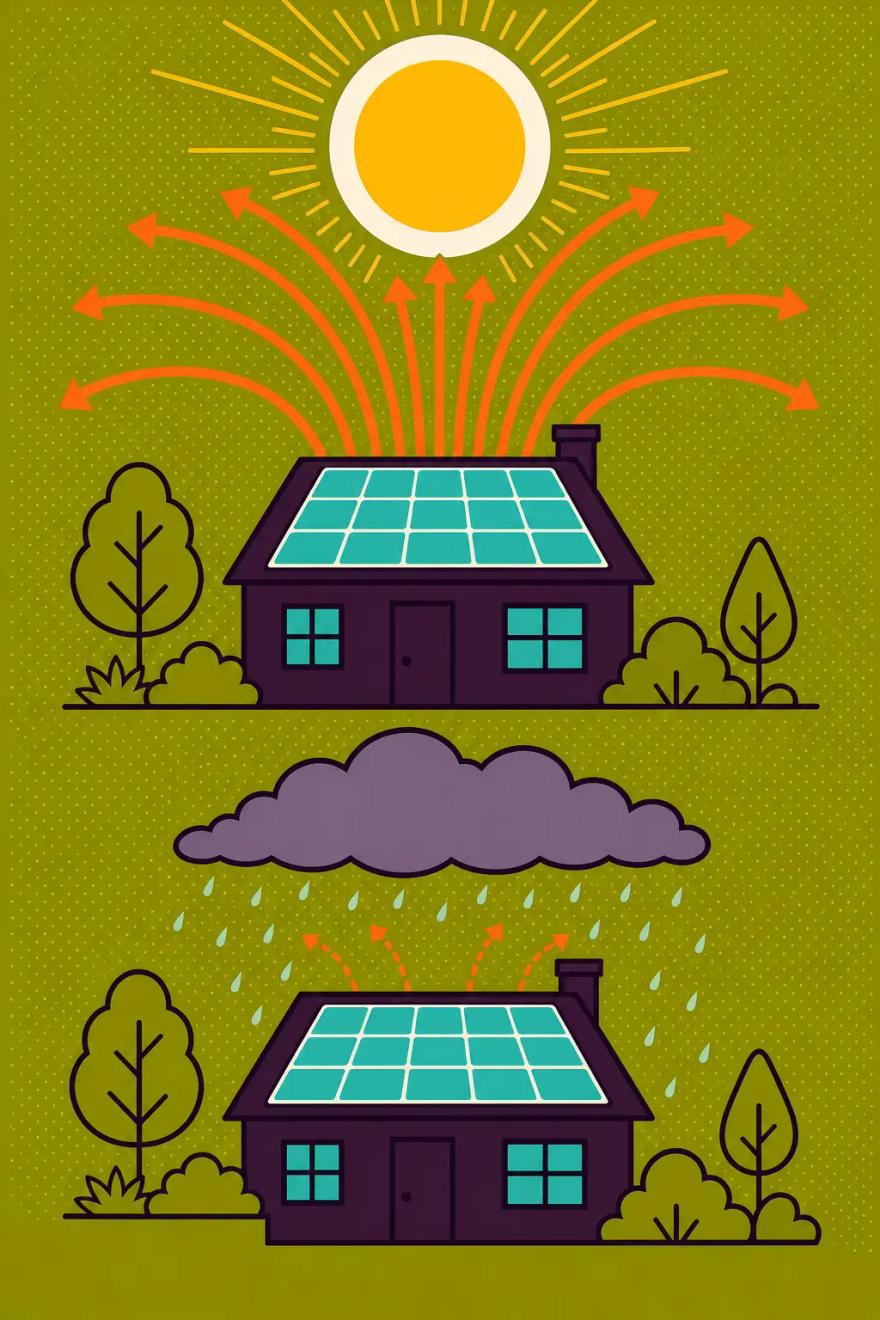
What You Need Before You Price a Solar System
Before you compare equipment or system sizes, gather the basics.
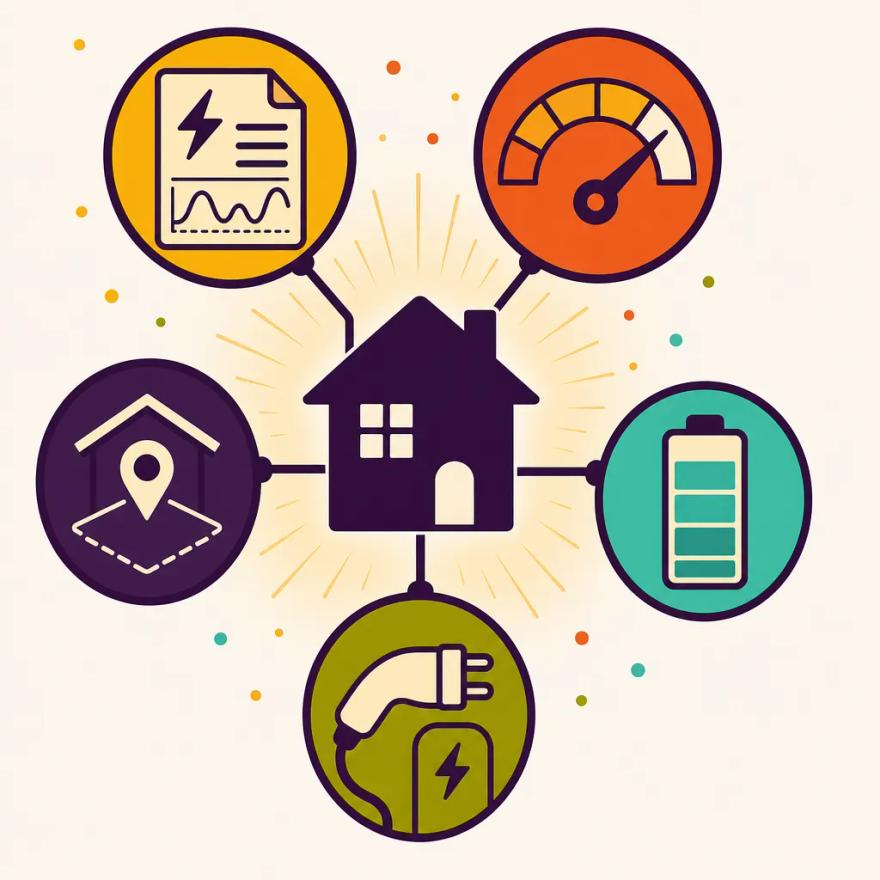
- Your electric billYour bill shows your energy usage in kWh. Ideally, use a full 12 months of usage so the system can account for seasonal changes.
- Your project goalAre you trying to lower your bill, add backup power, go off-grid, plan for future loads, or compare against an installer quote?
- Your site detailsWhere could the panels go — roof, ground mount, garage, barn, shop? Note roof type, age, direction, and pitch; shading and available space; and your main service panel and meter location.
- Your backup prioritiesIf you want batteries, decide what needs to stay powered: refrigerator, lights, internet, well pump, medical equipment, sump pump, security system. Backup design is about priorities — not everything can or should be backed up.
- Your future loadsThink ahead. EV charger, heat pump, mini-split, electric water heater, workshop tools, pool equipment, a home addition or ADU — bring planned loads into the conversation early so the system is sized for where you're headed.
What Self-Install Solar Actually Involves
Self-install solar is not just mounting panels. A complete project runs in a sequence, and knowing the order is half the battle:

- Review your electric usageTwelve months of kWh data is the foundation every good design is built on.
- Choose the right system typeGrid-tied, grid-tied with battery backup, or off-grid — driven by your main goal.
- Design the array and select componentsPanels, inverter, batteries, and racking that are verified to work together for your site and loads.
- Get permit-ready plansA plan set drawn to your jurisdiction's requirements, with stamped engineering where required.
- Submit for permit approvalIn most U.S. jurisdictions, a homeowner cannot pull the electrical permit for a grid-tied system — a licensed electrical or general contractor must, even when you do the physical labor. Confirm your local rules before you buy anything.
- Submit utility interconnection paperworkYour utility's application to connect — separate from the building permit, and just as mandatory.
- Install racking and equipmentThe physical work most self-installers handle themselves, following the design.
- Coordinate licensed electrical workMany customers hire their own electrician for the final electrical connection or other required work.
- Pass inspectionYour jurisdiction verifies the install matches the approved plans.
- Receive permission to operate (PTO)The utility's green light — your system officially switches on.
Some homeowners can handle a large portion of the physical installation. Others choose to do some of the work themselves and hire help for the rest. The important thing is knowing which parts are safe and reasonable for you to take on, and which parts need a licensed professional. Unbound can help guide you on where that professional support may be needed, but you are responsible for sourcing and hiring the electrician.
Permitting, Interconnection & Where Projects Get Stuck
Most solar problems do not come from the panels. They come from the red tape — permits and utility interconnection — and from decisions made before the panels ever go up.
Every grid-tied project needs two approvals most first-timers underestimate: a building/electrical permit from your local jurisdiction, and an interconnection agreement with your utility (your permission to operate). Both want specific, correctly-drawn documentation — and both are exactly what we prepare for you, so your project doesn't stall in a plan-check queue.
There's good news on the timeline front: SolarAPP+, the Department of Energy-backed instant permitting platform, is now live in 300+ jurisdictions across 17+ states, turning what used to be weeks of plan review into same-day approval in participating areas. Whether your jurisdiction is one of them or still runs a 60–90 day queue, the thing that gets you approved is the same — a correctly prepared plan set. Our permitting team tracks these requirements jurisdiction by jurisdiction so you don't have to.
See how our permitting service works
Common issues that stall a project:
- Buying equipment before the system is designed
- Choosing an inverter that does not match the project goal
- Assuming standard grid-tied solar works during outages
- Ignoring utility interconnection requirements
- Underestimating permitting requirements
- Not planning for future loads
- Treating batteries as an afterthought
- Sizing an off-grid system without a real load calculation
- Overlooking roof condition, shading, or mounting constraints
- Waiting too long to involve an electrician where required
What Unbound Solar Helps With
Unbound Solar supports homeowners who want to take control of their solar project without being left to figure out the technical details alone. We can help with:
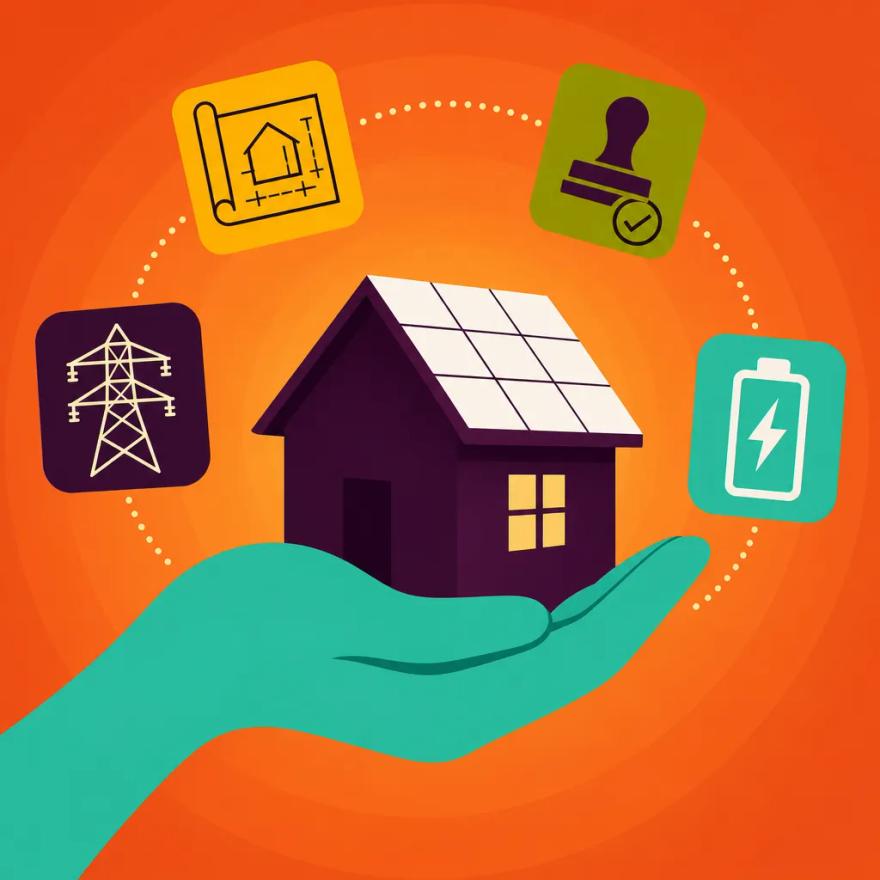
- Design & equipmentSolar system design and equipment selection — panels, inverters, racking, batteries, and balance-of-system components that work together.
- Permits & engineeringPermit-ready plans, stamped engineering where required, and plan revisions if your jurisdiction asks for changes.
- Utility & inspectionInterconnection support and inspection support, through to permission to operate.
- Backup & integrationBattery backup planning, generator integration guidance, and clear direction on when to involve a licensed electrician.
Is Self-Install Solar Right for You?
| Self-install with expert support may be a good fit if… | It may not be the right fit if… |
|---|---|
| You want to reduce the cost of going solar | You want someone else to handle every step |
| You want to own your system | You are not comfortable managing permits, inspections, or project logistics |
| You are comfortable managing a hands-on project | You do not want to hire an electrician where required |
| You want guidance from people who understand system design and permitting | Your roof needs major repairs first |
| You are willing to follow plans and local requirements | You want a one-size-fits-all answer without reviewing your bill, site, and utility rules |
| You understand that some electrical work may require a licensed electrician | |
| You want more control than a typical turnkey solar sale gives you |
Choose Your Starting Point
If you are not sure where to begin, start with the path that sounds most like your project.
- “I want to lower my electric bill.”Start with a grid-tied solar estimate based on your electric usage and utility rate.See what it would cost →
- “I want backup power.”Start by listing the loads you want to keep running during an outage, then size the battery around them.See what it would cost →
- “I have a remote property.”Start with a load calculation so the off-grid system can be sized around your actual daily energy needs.
- “I got a high solar quote.”Start by comparing the equipment, system size, financing terms, and scope of work against a complete self-install kit with expert design support.See what it would cost →
- “I’m planning for future loads.”Start with your current usage, then add realistic estimates for EV charging, heat pumps, workshops, or other planned electrical loads.
Start With a Solar Estimate
The best way to get started is with your actual numbers.
A rough estimate is a great place to start, but a real design accounts for things a calculator can't — irradiance and shading analysis, your actual roof angle and azimuth, and the fire and ridge setbacks your specific jurisdiction requires by code. The #1 reason DIY permit applications get rejected is homeowners planning around roof space they're not actually allowed to use.
The low-pressure path: see what a complete kit would cost first, then talk to a technician who knows your local requirements if it fits your budget and goals. That's the whole idea behind Unbound — 20 years supplying professional-grade equipment to DIYers and licensed installers alike, at the best value on gear done right. You're not doing this alone.
See Your Cost First. Then Talk Design.Enter your location, energy usage, and project goals. From there, we can help you understand what kind of system fits your home, what equipment you need, and what questions to answer before moving forward.Get My Solar EstimatePrefer to browse first? See complete solar kits — every kit is a full, engineered system, not a box of parts.
Questions people actually ask
Straight answers, sourced from real searches.
It means you handle the parts of the project you're capable of — like some of the physical installation — while a licensed team designs your system, prepares permit-ready plans, secures utility interconnection, and provides stamped engineering where required. You own and control the project; you're just not guessing your way through the technical and regulatory parts alone.
In most jurisdictions, yes for the physical work — but no for the paperwork alone. A homeowner typically cannot pull the electrical permit for a grid-tied system themselves; a licensed electrical or general contractor must, even if the homeowner does the physical installation. Rules vary by state and utility, so confirm your local requirements before you buy equipment.
For an 8 kW system, self-install typically saves $8,000–$15,000 versus a full-service installer quote, mainly because labor, sales overhead, and financing fees — not the equipment — make up a large share of installed cost. The trade-off is that you take on more of the project management, which is exactly what expert design and permitting support is meant to offset.
It's gone for homeowner-owned systems. The 30% Residential Clean Energy Credit (Section 25D) ended December 31, 2025, with no phase-down period. Systems placed in service in 2026 or later do not qualify. State and local rebates and incentives still exist and change often, so it's worth checking what's currently active where you live.
For homeowners with enough equity, a HELOC can turn an upfront equipment cost into a monthly payment similar to what they already pay the utility — often at a lower rate than a solar-specific loan. It isn't an incentive, and it puts your home up as collateral, so it fits some situations better than others; talk to a lender and a tax professional before committing.
Net metering lets you bank credit for solar you export to the grid and draw it back down later, ideally netting close to zero over a year. Older 1-to-1 (retail) rules credited exported power at close to the retail rate; newer rules like California's NEM 3.0 credit exports at wholesale rates instead — often a fraction of retail — which is why batteries have become the way to protect a solar system's payback.
Not to make solar work, but increasingly yes to make it pay off well. Under newer, lower export-credit rules, a right-sized battery lets you store your own daytime solar and use it yourself instead of selling it back cheap — recovering a large share of its value that would otherwise go to the utility at a low wholesale rate.
It depends on your electric rate, your utility's export rules, your roof or site, and your usage — which is exactly what a real estimate accounts for and a generic online calculator can't. Start with your address and electric bill in our solar estimator to see real numbers for your home.
SolarAPP+ is a Department of Energy-backed instant online permitting system now adopted by 300+ jurisdictions across 17+ states, cutting review times from weeks down to same-day in participating areas. Whether or not your jurisdiction uses it, a correctly prepared plan set is still what gets you approved — that's what a permitting service handles either way.
Ready to see if self-install solar fits you?
Get a real cost estimate for a complete, code-ready kit sized to your home — no pressure, no obligation.